Korea Certification
KC Certification
Certification Overview
KC (Korea Certification) was formerly known as EK Certification. It is a safety certification system for electronic and electrical products in South Korea. Specifically, it is the KC logo certification, which is a mandatory safety certification system implemented by the Korea Institute of Standards and Science (KATS) on January 1, 2009, based on the "Electrical Appliances Safety Control Act" (ELECTRIC APPLIANCES SAFETY CONTROL ACT).
To avoid duplicate certifications, starting from July 1, 2012, EMC and Safety were separated for management. For electronic and electrical products applying for Korean certification, for their safety (Safety) and electromagnetic compatibility (EMC) requirements, they must obtain the KC certificate and the KCC certificate (new MSIP) respectively. There are two certification authorities for KC: the Korea Testing Certification Institute (KTC, Korea Mechanical, Electrical and Electronic Testing Institute) and the Korea Electrical Testing Institute (KTL, Korea Industrial Technology Testing Institute). These two institutions are not only the issuing authorities of KC certificates but also the qualification testing laboratories.
In terms of safety standards, all products entering the Korean market must comply with the Korean safety standard K standard (similar to the IEC standard). When using the IEC standard, it must meet the requirements of Korea. The differences in national standards can be found in the announcements of the IECEE CB system. In terms of EMC, the Korean EMI standard is similar to the CISPR standard, and the EMS standard is similar to the EN standard.
According to the latest requirements of the "Electrical Appliances Safety Control Act", based on the different levels of product hazards, the KC certification is divided into mandatory safety certification, self-regulatory safety certification, and supplier self-confirmation. Among them, the mandatory safety certification controls products with higher hazards, while the supplier self-confirmation controls products with lower hazards.
Product Scope
The product scope of KC certification generally includes electrical products above 50 volts AC and below 1000 volts AC:
1. Cords, Cables, and Cord Sets
2. Switches for Electrical Appliances
3. Capacitors or filters as components for the power supply unit
4. Electrical Equipment Components and Connecting Components
5. Installation Accessories and Connection Devices
6. Safety Transformers and Similar Equipment
7. Household and Similar Equipment Appliances
8. Motor Tools
9. Audio, Video, and Similar Electronic Appliances
10. IT and Office Appliances
11. Lighting Machines
12. Equipment using power adapter or charger (Appliance with Power Supply or Charger)
Application Process
1. The customer prepares the samples and materials and submits them to E-You.
2. E-You submits the samples and materials to KTL/KTC for testing.
3. KTL/KTC conducts safety tests, and after the tests are completed, they issue the KC test report.
4. (If necessary) For safety certification, KTL/KTC needs to arrange a factory inspection, and subsequent annual factory inspections are conducted every year.
5. KTL/KTC reviews the report and other application documents. After there are no issues, the KC certificate is issued.
Certification Mark
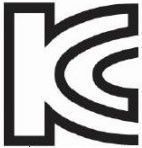
The KC label must include the following contents:
① KC logo (including certificate number SUxxxxxxxx)
② Product name (must be expressed in Korean)
③ Model name
④ Voltage and frequency
⑤ Factory name
⑥ Manufacturing country
⑦ Double insulation mark "回" (if necessary)
⑧ Production date and month
⑨ A/S service hotline (must be in Korea)
Other information
Technical Information: Voltage frequency 110V/220V/380V, 60Hz or 50Hz/60Hz, plug KSC8305
Is mandatory: Mandatory
Certificate validity period:
1. Mandatory safety certification - None, annual review maintains validity (as follows template)
2. Self-regulatory safety confirmation - 5 years
3. Supplier self-confirmation - No certificate, confirmation letter is permanently valid
Factory inspection requirements: Mandatory safety certification requires initial factory inspection and annual review
Holder requirements: Mandatory safety certification must be held by the factory, while the other two types of certifications can be held by the factory, manufacturer, or importer.
MSIP Certification
Certification Overview
Unlike many countries which have separate certification controls based on different requirements such as EMC, wireless RF, and communication TELEC, Korea has integrated EMC/RF/TELECOM certifications into the MSIP certification. The certification name for Korean wireless communication certification has undergone a development process from MIC to KCC, and then to MSIP.
First, let's introduce the predecessor of MSIP, KCC. KCC certification is a mandatory certification for wireless communication equipment and products implemented according to the "Telecommunication Basic Law" and "Radio Wave Law" of Korea. Later, as KC separated Safety and EMC, EMC was also included in the KCC certification scope. The Korea Communications Commission KCC is responsible for managing telecommunications products and authorizes the Korea Radio Research Agency (RRA, Radio Research Agency) as its certification body to implement specific certification work. KCC certification undergoes conformity testing by the Korean laboratories recognized by its predecessor MIC certification and is issued a model approval certificate by RRA.
Since July 1, 2013, the responsible unit for Korean EMC/RF/TELECOM certifications has been changed from the Korea Communications Commission KCC to the Ministry of Science, ICT & Future Planning MSIP of Korea. As a result, the ID code in the KC logo will change from KCC to MSIP, while there are no other changes.
According to the category of the product, MSIP is mainly divided into the following three types of certification:
1. Conformity Certification: Wireless communication equipment, such as telephones, regulators, facsimile machines, etc.
2. Conformity Registration: Electrical products.
3. Interim Certification: For equipment with no standards yet
Product Scope
It mainly includes all wireless communication products and most of the electronic and electrical products covered by KC certification. Here are just a few examples:
1. Automatic alarm receiver installed on ships
2. Automatic alarm telephone device
3. Emergency position-indicating radio beacon
4. Shipboard wireless navigation radar and automatic radar track equipment
5. Maritime mobile telephones
6. Satellite mobile communication radio station equipment
········
Application Process
1. The customer prepares the samples and materials, and submits the application to ITA.
2. ITA submits the samples and materials to KTL/KTC for testing.
3. KTL/KTC conducts the tests, issues the test report, and submits it to the Korean certification authority RRA.
4. The Korean authority RRA reviews the report and other application documents. Once there are no issues, it issues the MSIP certificate.
Marking Requirements
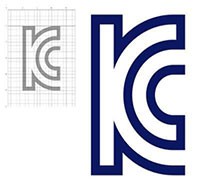
The MSIP label must include the following information:
· KC logo (including the certificate number MSIPxxxxxxxxx)
· Product name (must be expressed in Korean)
· Model name
· Factory name
· Manufacturing country
· Production date and month
Other information
Technical Information: Voltage frequency 110V/220V/380V, 60Hz or 50Hz/60Hz, plug KSC8305
Is mandatory: Mandatory
Certificate validity period: No validity period
Factory inspection requirements: None
Holder requirements: None
Korean Energy Efficiency System MEPS/E-standby/HECP
Certification Introduction
In order to popularize and expand energy-saving products, reduce global energy consumption and lower greenhouse gas emissions (environmental protection), and encourage consumers to purchase energy-efficient products, Korea introduced the energy efficiency certification system since the 1990s. The energy efficiency management agency in Korea is the Korea Energy Management Corporation (KEMCO). The testing institutions mainly include KTL and KTC. According to the product and standard, it is mainly classified into three categories:
1. Energy Efficiency Rating System MEPS
The energy efficiency rating system marks products according to energy efficiency and energy consumption levels as 1 to 5 grades. The energy efficiency lower limit, which is the minimum consumption efficiency standard (MEPS: Minimum Energy Performance Standard), is an obligation system applicable.
The Korean government began to introduce mandatory energy efficiency registration marking system in 1992, using the energy consumption rate grade label to identify products. To expand the popularization of energy-saving products, the energy consumption rate grade marking system imposes the following three obligations on domestic manufacturers (domestic) and domestic importers (importers): ① Have the obligation to affix the energy consumption rate grade label; ② Have the obligation to report the product; ③ Need to meet the minimum consumption rate standard, etc.
2. Standby Low Power Consumption System E-standby
The Korean government also introduced the standby power (E-Standby) certification system that has been gradually mandatory since 1999.
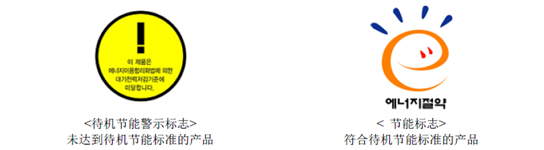
The standby energy-saving warning sign (yellow) is implemented for products that do not meet the standby energy-saving standards. Products that do not meet the requirements need to be affixed with this sign. On the contrary, if they meet the requirements, they need to be affixed with the energy-saving sign (smiling sign).
3. High-Efficiency Energy Equipment System HECP
The Korean government introduced the voluntary high-efficiency equipment program (High-efficiency Appliance Certification program) in 1996, which is a certification system that assesses the inspection results of energy efficiency and quality tests and requires meeting certain standards.
Product Scope
1. MEPS coverage product range (35 types):
| Refrigerator | Dehumidifier | Multi functional electric water pump system | Commercial refrigerator | Fluorescent lamp |
| Electric refrigeration equipment | Cold and warm water machine | ballasts for fluorescent lamps | Water heater (air) | Dehumidifier |
| Kimchi refrigerator | Rice cooker | ballasts for internal fluorescent lamps | Transformer | Electric blanket |
| Air conditioner | Vacuum cleaner | Three phase induction motor | Window set | Bed heater |
| Washing machine | Electric fan | Household boiler (gas) | Television | Heat transfer plate |
| Drum washing machine | Air purifier | Adapter/charger | Click on the heater | Electric bed |
| Dishwasher | incandescent lamp | Heating and cooling air conditioner | Electric heating | Electric radiator |
2. The low-power standby mode E-standby covers the product range (22 types):
| Computer | Copier | Television | Microwave oven | Automatic wash dry toilet |
| Monitor | Scanner | Audio equipment | Set top box | Modems |
| Printer | Compound machine | DVD player | Video doorbell | There is a wireless telephone |
| Fax | Hand dryer | Recorder | Home gateway | Automatic power-saving control device |
| Video recorder | Server |
3. High-Efficiency Energy Equipment System (HECP) covers the product range (41 types):
| High intensity reflector for fluorescent lamps | LED guide light | Sodium lamp ballast |
| Illuminance automatic control lighting equipment | Converter in exterior LED lights | Transformer |
| Waste heat recovery type ventilator | Converter for internal LED lights | LED traffic lights |
| Gas water heaters for industrial buildings | Vending machine | Direct fired absorption chiller/heater |
| Centrifugal spiral freezer | Metal halide lamp ballasts | Single phase induction motor |
| Ventilation fan for water use | Oil fired warm water heater | Oil fired water heaters for industrial buildings |
| Incomplete listing |
Application Process
1. Submit the documents and samples to KTC/KTL
2. KTC/KTL conduct tests and issue test reports
3. KTC/KTL contact the local agent/importer and register with KEMCO officially
4. Once registration is successful, KEMCO issues the MEPS certificate and also provides the label design drawings
5. The importer affixes the energy efficiency label
Note: The registration must be completed within 60 days after the report is issued. Otherwise, the test report will be invalid and become void!
Label Requirements
1. Energy Efficiency Rating Marking System MEPS Label:
The MEPS labels for different products are different. Below are examples of energy efficiency labels for commonly seen products:
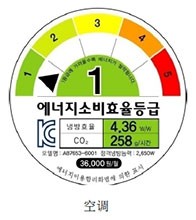
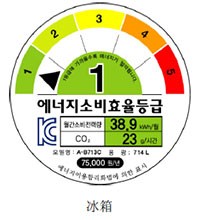
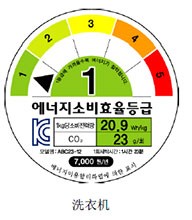
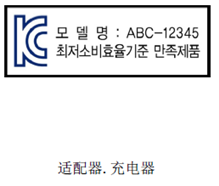
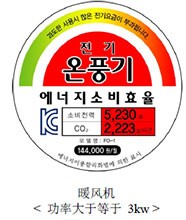
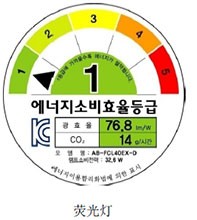
2. E-standby low power consumption label for standby mode:
The E-standby warning sign (left image) is a mandatory label that must be affixed to products that fail to meet the standby energy-saving standards. The purpose is to raise consumers' awareness. In contrast, the energy-saving label (right image) is a voluntary label that can be affixed to products that meet the standby energy consumption standards.
3. High-Efficiency Energy Equipment System (HECP) Label:

Other information
Technical Information: Voltage and frequency: 110V/220V/380V, 60Hz or 50Hz/60Hz, Plug KSC8305
Is it mandatory: Mandatory
Certificate validity period:
1. Energy Efficiency Labeling System MEPS: No validity period
2. Low Power Consumption During Standby System E-standby: No validity period
3. High Efficiency Energy Equipment System HECP: 3-year validity period
Factory inspection requirements: None
Requirements for certificate holders: Must be declared by local importers in South Korea
- previous: Philippine Certification
- next: Malaysia Certification